

 Send Email
 whatsapp


Microfiber Cleaning Cloths for Cars, Kitchens, and Bathrooms: One Cloth, Many Uses

Microfiber Cleaning Cloths offer outstanding cleaning ability for cars, kitchens, and bathrooms. Scientific studies reveal that amicrofiber towel removes more pathogens than traditional cloths. A microfiber cleaning cloth, such as a microfiber cloth for car interiors, also works well on kitchen counters and bathroom fixtures. Microfiber rags provide reliable cleaning.
Key Takeaways
- Microfiber cleaning cloths trap dirt and bacteria effectively, removing up to 99% of pathogens compared to traditional cloths.
- These cloths are reusable and durable, lasting up to 500 washes, which saves money and reduces waste.
- Using a color-coding system for different cleaning areas prevents cross-contamination and enhances cleaning efficiency.
What Makes Microfiber Cleaning Cloths Unique
Microfiber Technology Explained
Microfiber Cleaning Cloths use advanced technology to deliver superior cleaning results. Microfiber consists of extremely fine fibers that create a large surface area. This structure allows the cloth to trap dirt and dust efficiently.
- The tiny fibers reach into crevices, lifting away grime for a thorough clean.
- Microfiber Cloths remain lint-free, leaving no fibers behind on surfaces.
- The non-abrasive texture protects delicate materials from scratches.
Microfiber’s split fibers create a capillary effect, removing dirt that traditional fibers often smear. The electrostatic properties attract dust, while the fibers absorb fat and grease. Microfiber Cleaning Cloths can reduce bacteria by up to 99%, far outperforming conventional materials.
Multi-Surface Cleaning Power
Microfiber Cleaning Cloths adapt to many surfaces without causing damage.
- For dusting, a dry cloth attracts and traps dust.
- On mirrors and glass, a damp cloth removes spots, then dries streak-free.
- Counters benefit from both dry and damp cleaning.
- These cloths also work well for washing dishes and mopping floors.
Microfibers attach to microscopic dirt particles that normal cloths cannot reach. This versatility makes them ideal for cars, kitchens, and bathrooms.
Durability and Reusability
Durability sets Microfiber Cleaning Cloths apart from other cleaning tools. Studies show that while some cloths lose effectiveness after about 20 wash cycles, others maintain strong performance up to 150 washes. Manufacturer claims suggest up to 500 washes, but real-world results vary.
Tip: To extend the life of a microfiber cloth, follow care instructions and avoid harsh chemicals.
Even after many washes, these cloths often outperform new traditional cloths, making them a cost-effective and sustainable choice.
Microfiber Cleaning Cloths for Car Care

Interior Surfaces
Microfiber Cleaning Cloths provide superior results for car interiors. These cloths trap dust and dirt without leaving lint or scratches. Their absorbent fibers quickly soak up spills and moisture, making them ideal for seats, dashboards, and door panels.
- They deliver a streak-free finish, which is especially important for touchscreens and glossy surfaces.
- Their durability allows for repeated use, reducing waste compared to paper towels.
Exterior Cleaning
Microfiber towels protect delicate car finishes. Their soft, non-abrasive fibers clean without scratching paint or clear coats. Unlike traditional towels, they do not leave fine scratches.
- Microfiber cloths are soft and lint-free.
- They trap dirt and absorb water efficiently, making washing and drying easier.
- Car owners appreciate their affordability and convenience.
Glass and Mirrors
Clean glass and mirrors improve visibility and safety. Quality microfiber towels remove smudges and fingerprints, leaving a streak-free shine.
Tip: Use multiple clean cloths and fold them to a fresh side after each wipe to avoid transferring dirt or oils back onto the glass.
Tips for Best Results
- Use different colored towels for various areas to prevent cross-contamination.
- Wash towels in warm water with mild detergent, avoiding fabric softener.
- Air dry or tumble dry on low heat without dryer sheets to maintain absorbency.
Microfiber Cleaning Cloths offer a reliable, eco-friendly solution for car care, ensuring every surface looks its best.
Microfiber Cleaning Cloths in the Kitchen
Countertops and Surfaces
Microfiber Cleaning Cloths outperform sponges and paper towels on kitchen countertops. They absorb more liquid and remove up to 99% of bacteria, making them ideal for hygienic cleaning.
- Sponges often harbor bacteria and require frequent replacement.
- Paper towels are single-use and contribute to environmental waste.
Microfiber cloths provide a sustainable and effective solution for daily kitchen cleaning.
Appliances and Fixtures
Kitchen appliances and fixtures benefit from the versatility of microfiber. The cloths clean surfaces without scratching or leaving lint.
| Benefit | Description |
|---|---|
| Reduced Cleaning Products | Microfiber cloths can significantly lower the amount of cleaning products needed, saving money. |
| Versatile Cleaning | They can be used dry or damp for various tasks, including dusting and cleaning surfaces. |
| Safe for Delicate Surfaces | Microfiber is gentle enough to clean stone countertops without causing damage. |
| Superior Cleaning Power | Capable of capturing up to 99% of bacteria and dirt for a thorough clean. |
| Streak-Free Shine | Ideal for glass and mirrors, leaving surfaces spotless. |
| Eco-Friendly | Reduces reliance on chemical cleaners, making them a greener option. |
| Lint-Free Cleaning | Unlike cotton cloths, they leave no lint or streaks behind. |
| High Absorbency | Can hold up to 8 times their weight in water, enhancing cleaning efficiency. |
| Non-Scratch | Safe for delicate surfaces, preventing scratches during cleaning. |
Dishes and Utensils
Microfiber cloths excel at cleaning dishes and utensils. Their fibers trap grease and food particles, leaving surfaces spotless. They dry quickly, reducing the risk of bacterial growth. Users appreciate their durability and reusability.
Handling Spills
One of the main advantages of microfiber is its exceptional absorbency. These cloths can hold up to seven times their weight in liquid, allowing efficient soaking of spills or drying of dishes with ease.
Microfiber Cleaning Cloths trap dirt, grease, and bacteria, making them ideal for tough kitchen messes.
Hygiene Tips
- Wash microfiber towels after each use to maintain cleaning effectiveness and prevent bacteria buildup.
- Change cloths after cleaning meat spills to minimize contamination.
- Choose fast-drying cloths and hang them to dry between uses.
- Wash towels frequently in hot water with bleach or disinfectant cleaner.
- Avoid soaking cloths between uses to reduce bacterial growth.
Microfiber Cleaning Cloths in the Bathroom
Sinks and Counters
Microfiber Cleaning Cloths deliver impressive results on bathroom sinks and counters.
- They lift grime and soap scum without scratching surfaces.
- These cloths help prevent hard water spots and leave a polished finish.
- Their gentle fibers protect delicate surfaces, making them suitable for daily cleaning.
Mirrors and Glass
Mirrors and glass surfaces in bathrooms often show streaks and water spots. Microfiber cloths remove these marks efficiently. The fine fibers trap dust and moisture, resulting in a clear, streak-free shine. Many cleaning professionals recommend using a dry cloth after applying a cleaning solution for the best results.
Tiles and Grout
Bathroom tiles and grout require special care to maintain their appearance.
- Microfiber cloths clean tiles gently, avoiding scratches that brushes may cause.
- They do not grind dirt into the surface, which helps preserve tile exteriors.
- Many users report water savings and superior cleaning when using microfiber.
- These cloths are essential for a streak-free finish and are often included in tile cleaning kits.
Fixtures and Hardware
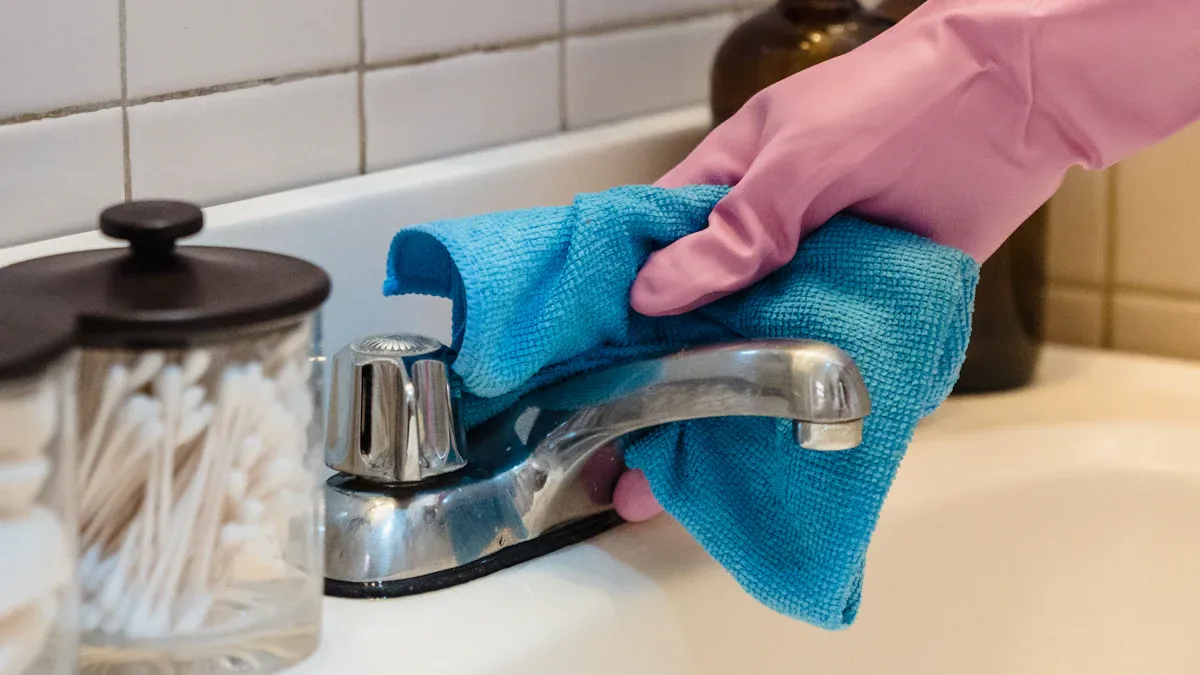
Bathroom fixtures and hardware, such as faucets and handles, benefit from regular cleaning with microfiber. The cloths remove fingerprints, water spots, and soap residue, restoring shine without harsh chemicals. Their non-abrasive texture protects chrome and stainless steel finishes.
Preventing Cross-Contamination
Color-coding cleaning cloths helps prevent cross-contamination in bathrooms.
| Color Code | Area of Use |
|---|---|
| Red | High risk areas such as toilets and urinals |
| Yellow | Lower risk areas such as sinks and counters |
| Blue | Low risk areas such as glass and mirrors |
Staff should clean from top to bottom, starting with cleaner sections like sinks before moving to toilets. Replacing cloths after cleaning high-risk areas further reduces contamination. Proper hand hygiene remains essential for safe bathroom cleaning.
Best Practices for Multi-Area Use of Microfiber Cleaning Cloths
Color-Coding Cloths
Color-coding microfiber cleaning cloths helps prevent cross-contamination and increases cleaning efficiency. Facilities often assign specific colors to designated tasks, ensuring that each cloth serves a unique purpose.
Cleaning professionals recommend the following color-coding system:
- Red: Used for sanitary appliances and restroom floors.
- Yellow: Reserved for other restroom surfaces, including sinks and dispensers.
- Green: Designated for general food and bar cleanup, such as kitchens and dining areas.
- Blue: Assigned to low-risk areas, including offices, classrooms, glass, and mirrors.
| Color | Task Description |
|---|---|
| Red | Restrooms such as toilets, urinals, and hazard areas. |
| Yellow | Dry dusting and polishing. |
| Green | General areas such as desks, tables, kitchens, etc. |
| Blue | Glass and mirrors. |
By following a color-coding system, cleaning staff reduce the risk of transferring bacteria from high-risk zones to food preparation or living spaces. This method also streamlines training and inventory management.
Washing and Care
Proper washing and care extend the lifespan of microfiber cleaning cloths and maintain their effectiveness. Manufacturers advise several key steps:
- Wash cloths in cold or lukewarm water to preserve fiber integrity.
- Use mild liquid detergent; avoid fabric softeners and harsh chemicals.
- Select gentle or delicate washing cycles to prevent fiber damage.
- Wash microfiber separately from lint-prone items, such as cotton towels.
- Ensure cloths are clean and dry before storage to prevent mold growth.
Routine care keeps microfiber cloths absorbent and free from residue. Regular washing after each use removes trapped dirt and bacteria, supporting hygienic cleaning practices.
Proper Storage
Organized storage prevents contamination and keeps microfiber cloths ready for use.
To keep microfiber cleaning cloths clean and ready for use, it is recommended to have a designated place for drying and storing them. For instance, using a bucket for wet cloths and a wire basket for dry ones helps prevent cross-contamination.
Facilities often install racks or baskets in cleaning closets. Staff separate wet and dry cloths immediately after use. Proper ventilation in storage areas reduces the risk of mildew and unpleasant odors. Labeling storage containers by color further supports the color-coding system.
Avoiding Cross-Use
Strict separation of cleaning cloths by area is essential for health and safety.
Cross-contamination occurs when cleaning tools, like rags, are used in multiple areas without proper precautions. For example, a cleaner might use the same rag to clean a restroom and then your desk, simply because there isn’t a strict system in place to prevent this from happening.
Facilities must train staff to use only designated cloths for each area. Supervisors monitor compliance with color-coding and storage protocols. Regular audits and reminders reinforce best practices. By avoiding cross-use, teams protect occupants from harmful bacteria and maintain a professional standard of cleanliness.
Benefits of Using One Microfiber Cleaning Cloth for Many Uses
Cost-Effectiveness
Households experience significant savings by switching from disposable products to reusable cleaning cloths. The following table compares the annual costs of paper towels and microfiber cloths:
| Category | Paper Towels (Disposable) | Microfiber Cloths (Reusable) |
|---|---|---|
| Unit Cost | $0.01–$0.02 per sheet | $0.06–$0.10 per cloth |
| Uses Per Unit | 1 | 300–500 |
| Cost Per Use | $0.01–$0.02 | $0.002–$0.003 |
| Monthly Spend (avg.) | $300–$500 | $50–$100 |
| Annual Cost | $3,600–$6,000 | $600–$1,200 |
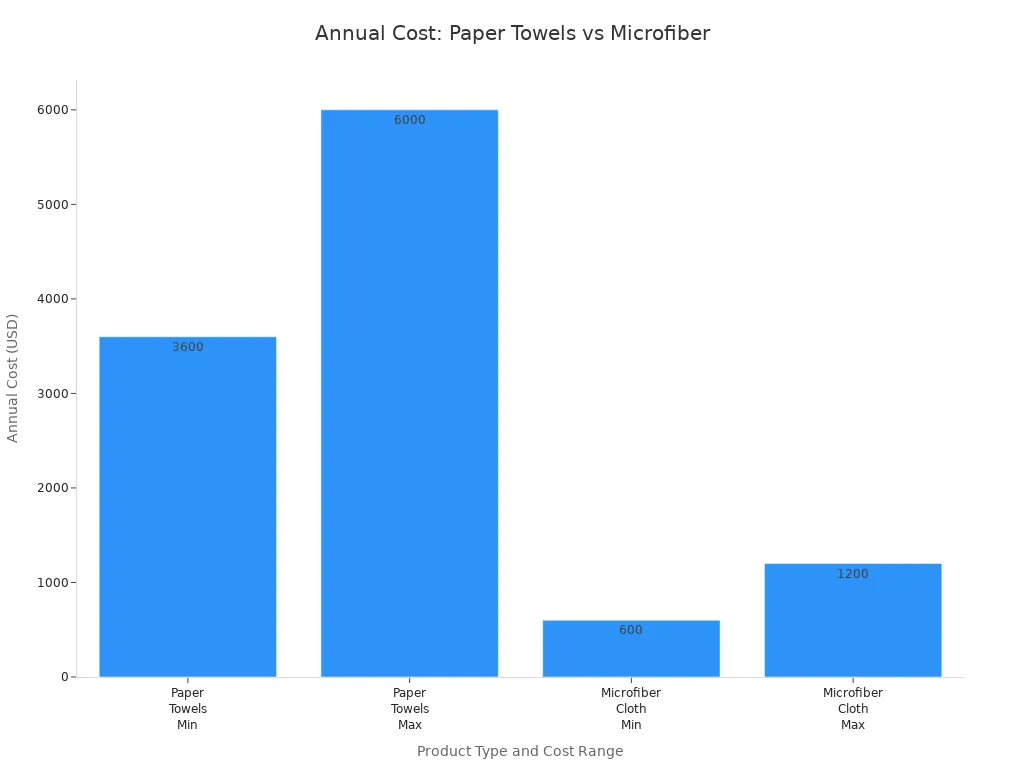
Microfiber Cleaning Cloths last up to 300 washes, while single-use products require constant replacement. Households often save 70–85% annually by choosing reusable options.
Environmental Impact
Microfiber cloths offer substantial environmental benefits.
- The paper industry uses more water than any other industry worldwide.
- Microfiber products conserve water and reduce disposable product usage.
- These cloths withstand hundreds of wash cycles, decreasing landfill waste.
- Their high absorbency allows effective cleaning with less water.
- Microfiber cloths reduce detergent needs, lowering water pollution.
A single cloth absorbs over six times its weight in water and can be reused up to 500 times, helping conserve resources and minimize waste.
Convenience and Simplicity
Microfiber cloths simplify cleaning routines for busy individuals.
- They trap dust and dirt efficiently, often without chemical cleaners.
- Users achieve a streak-free shine with minimal effort.
- Microfiber cloths remove up to 99% of bacteria, dust, and dirt, making cleaning faster.
- These cloths work dry for dusting or damp for wiping, increasing versatility.
- Fewer cleaning passes save time and energy.
Microfiber Cleaning Cloths streamline cleaning tasks, making them ideal for homes, cars, and workplaces.
Microfiber cleaning cloths deliver practical solutions for cars, kitchens, and bathrooms. Experts highlight their superior cleanliness, soil removal, and cost-effectiveness.
- Microfiber absorbs seven times its weight in water.
- The soft texture prevents scratches.
| Feature | Description |
|---|---|
| Cleaning Power | Removes dirt and biofilm better than cotton. |
| Durability | Reusable and sustainable for frequent cleaning. |
FAQ
How often should someone wash microfiber cleaning cloths?
Microfiber cleaning cloths require washing after each use. Regular washing maintains their cleaning power and prevents bacteria buildup.
Can microfiber cloths scratch delicate surfaces?
Microfiber cloths do not scratch delicate surfaces. Their soft fibers protect paint, glass, and stainless steel during cleaning.
What cleaning products work best with microfiber cloths?
Water alone works well with microfiber cloths. For tough stains, a mild detergent or specialized cleaner enhances performance.
