

 Send Email
 whatsapp


Why Disposable Mops Are Revolutionizing Facility Cleaning
Facility managers increasingly rely on disposable mop solutions to tackle persistent hygiene challenges. Studies reveal that traditional cotton mops often spread bacteria, raising cross-contamination risks.Disposable mop pads and mop disposable pads deliver consistent results, supporting infection control in environments like healthcare. Medical disposable mops and disposable mop heads further enhance safety and cleaning efficiency.
Key Takeaways
- Disposable mop systems greatly reduce the spread of bacteria by using a fresh pad for each cleaning, making spaces safer and lowering infection risks.
- These mops improve cleaning speed and consistency, helping staff clean more areas in less time while maintaining high hygiene standards.
- Eco-friendly disposable mop options support sustainability goals by using biodegradable materials and reducing water, chemical, and energy use.
Hygiene, Efficiency, and Compliance with Disposable Mop Solutions
Preventing Cross-Contamination and Infection
Facility cleaning teams face persistent challenges in controlling the spread of pathogens. Traditional cotton mops often reintroduce bacteria to cleaned surfaces, increasing the risk of cross-contamination. In contrast, disposable mop systems provide a fresh, uncontaminated pad for each area, significantly reducing the chance of transferring microbes between rooms. Hospitals that switched to single-use Microfiber Mops reported floors that were up to 80% cleaner and observed a notable reduction in healthcare-associated infections, including C. difficile. These improvements not only enhance patient safety but also lower the financial burden associated with infection-related incidents.
Note:Disposable Mop Heads also eliminate the need for laundering, which can leave behind residual pathogens even after washing. This ensures a higher standard of cleanliness and compliance with infection control protocols.
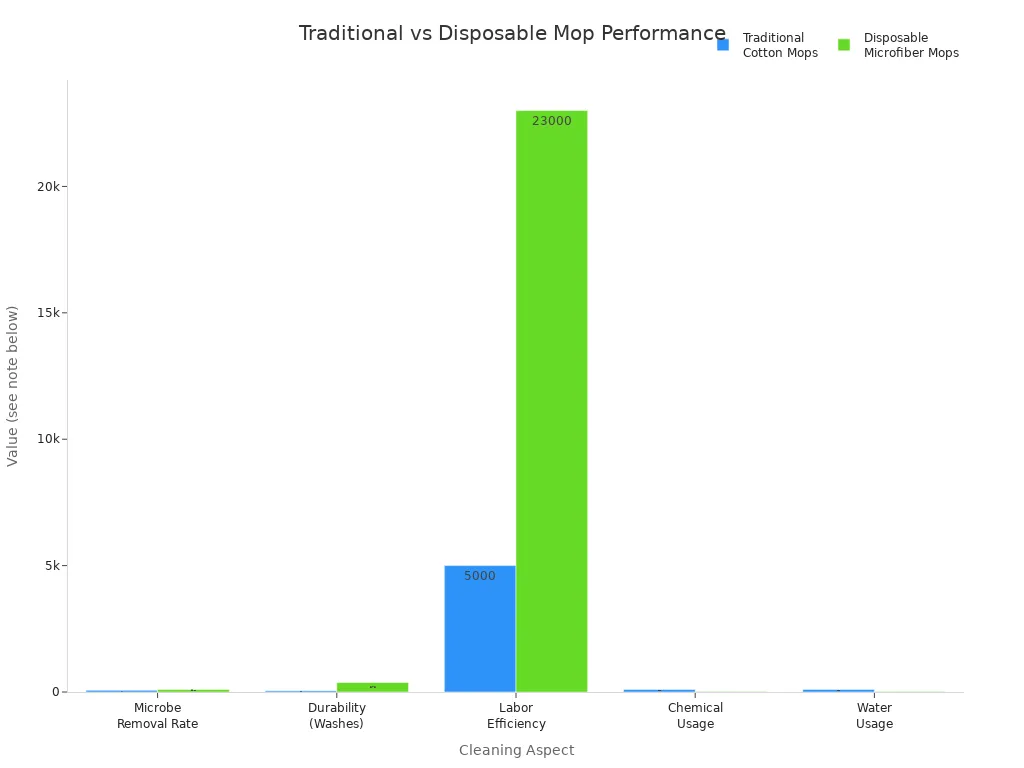
A comparison of cleaning performance highlights the advantages:
| Aspect | Traditional Cotton Mops | Disposable Microfiber Mops |
|---|---|---|
| Microbe Removal Rate | Approximately 67% (with 33% re-deposited) | Up to 99.54% (using water alone) |
| Cross-Contamination Risk | Higher due to reuse and bucket water | Reduced by using fresh pad per room |
| Durability (Washes) | Around 50 washes | Between 250 and 500 washes |
| Chemical Usage | Higher chemical consumption | Significantly reduced chemical use |
| Water Usage | Higher water consumption | Significantly reduced water use |
| Labor Efficiency (sq ft/hour) | About 5,000 sq ft/hr | Up to 23,000 sq ft/hr |
Consistent Cleaning Performance Every Time
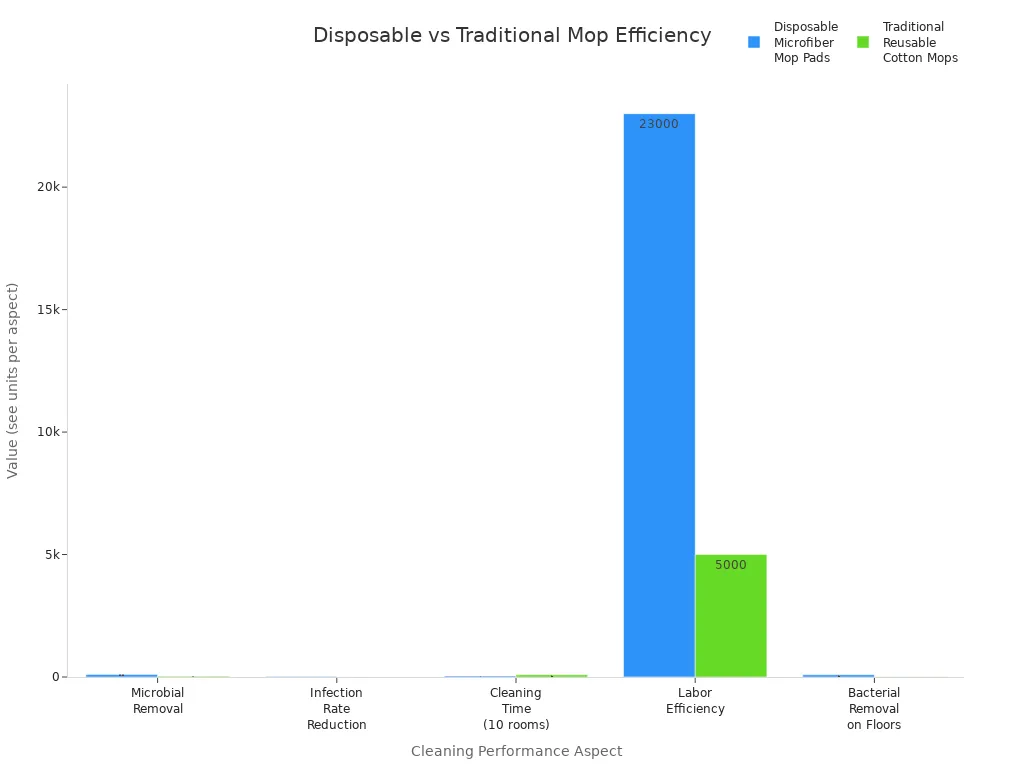
Consistency in cleaning results is essential for maintaining safe environments, especially in healthcare and food service settings. Studies show that nearly 27% of laundered reusable microfiber mops still contain microbial contamination, which can compromise cleaning outcomes. Disposable mop pads, on the other hand, deliver reliable performance with every use. Independent laboratory testing confirms that these pads remove at least 99.93% of microorganisms, ensuring that each cleaning session meets high standards.
In a research animal facility, disposable microfiber mops demonstrated superior performance compared to cotton string mops, especially when paired with effective disinfectants. The single-use design eliminates variability caused by laundering and wear, providing predictable results and supporting strict hygiene protocols.
Streamlining Workflows and Reducing Labor
Disposable mop systems simplify cleaning operations by removing the need for laundering and complex inventory management. Cleaning staff can quickly replace used pads, reducing downtime and increasing productivity. Hospitals report that cleaning ten rooms with disposable microfiber mop pads takes only 40 minutes, compared to 90 minutes with traditional methods, which include laundering time.
Tip: Training staff with tutorial videos and on-site demonstrations ensures proper aseptic mopping techniques, maximizing the benefits of disposable mop systems and maintaining compliance with industry standards.
Meeting Health and Safety Standards
Regulatory agencies and industry guidelines emphasize the importance of reducing cross-contamination and maintaining rigorous cleaning protocols. While no regulation explicitly mandates the use of disposable mop products, best practices in compliance-driven industries strongly recommend them to support infection prevention and audit readiness. Disposable microfiber mops help facilities meet standards set by organizations such as OSHA, EPA, and The Joint Commission.
- Disposable mop systems support compliance by:
- Reducing cross-contamination risks with single-use pads
- Supporting the use of EPA-registered disinfectants
- Simplifying adherence to standard operating procedures and staff training requirements
- Enhancing audit readiness and infection control outcomes
Facilities that adopt disposable mop solutions consistently achieve better compliance with health and safety requirements. The use of eco-friendly, biodegradable materials in many disposable mop heads also aligns with environmental safety goals, helping organizations balance infection control with sustainability.
Cost Savings and Sustainability Benefits of Disposable Mop Systems
Lowering Laundering and Maintenance Expenses
Facility managers often evaluate cleaning systems based on both upfront and long-term costs. Many believe that reusable products always save money, but the reality is more complex. Reusable mop systems require significant investment in laundering, maintenance, and replacement. These ongoing expenses can add up quickly, especially in large facilities. For example, reusable gowns and textiles have higher initial costs but reduce the need for frequent repurchasing. However, laundering and maintenance remain necessary, which increases operational complexity.
Cost analyses in cleanroom environments reveal that reusable systems can reduce costs by up to 58% compared to disposables, resulting in substantial national savings. Yet, these savings depend on efficient laundering processes and low loss rates. In contrast, disposable mop systems eliminate laundering expenses and reduce the need for specialized equipment. Facilities avoid the costs of water, energy, and chemicals required for cleaning reusable mops. They also minimize labor hours spent on sorting, washing, and managing inventory. While disposable mops may appear more expensive per unit, they often lead to lower total costs by streamlining workflows and reducing waste management needs.
Note: Many industry experts highlight that sustainable cleaning practices, including the use of disposable mop systems, can actually lower long-term costs. The misconception that green cleaning is always more expensive often stems from habit and lack of education rather than actual cost data.
Eco-Friendly Disposable Mop Options
Sustainability remains a top priority for modern facilities. Manufacturers now offer a range of eco-friendly disposable mop options that address environmental concerns. These products use innovative materials and responsible manufacturing processes to minimize their ecological footprint.
- Natural fibers such as 100% cotton allow mop heads to be composted when paired with chemical-free cleaning agents.
- Bamboo handles replace plastic or metal, providing a biodegradable and renewable alternative.
- Recycled plastics in mop heads reduce the demand for new plastic production.
- Some systems include washable microfiber pads, enabling partial reuse and reducing overall waste.
- Brands encourage the use of old clothes or fabric as mop pads, further cutting down on disposable waste.
- Packaging often features recycled or compostable materials to limit environmental impact.
- Many products carry certifications like Global Recycle Standard (GRS), USDA Certified Biobased, and GOTS Certified Organic, ensuring adherence to recognized sustainability standards.
- Some companies offset plastic use through programs that make their products plastic neutral.
Facilities can also choose refurbished steam mops to reduce electronic waste and extend product life. These options help organizations align their cleaning practices with broader sustainability initiatives.
Supporting Facility Sustainability Goals
Selecting the right disposable mop system supports both compliance and sustainability objectives. Leading eco-friendly mop products meet rigorous environmental standards and certifications, which help facilities demonstrate their commitment to responsible purchasing.
| Certification/Standard | Description | Audience/Applicability |
|---|---|---|
| U.S. EPA Environmentally Preferable Purchasing (EPP) | Helps agencies buy products with reduced environmental and health impacts across their lifecycle. | Federal agencies, eco-conscious buyers |
| U.S. EPA Comprehensive Procurement Guidelines | Recommends products made with recovered materials to maximize recycled content. | Agencies, buyers seeking reduced impact products |
| U.S. EPA Design for the Environment (DfE) | Ensures product ingredients pose the least concern for health and environment. | Anyone seeking safer products |
| Green Seal | Provides science-based environmental certification using life-cycle assessment. | Institutions, government, universities |
| Ecologist | Offers third-party multi-attribute labels for environmental performance. | General consumers, eco-friendly purchasers |
| Biodegradable Products Institute (BPI) | Certifies products meeting compostability standards. | Buyers interested in compostable products |
| LEED Certification (via microfiber use) | Supports LEED credits by reducing chemical use and promoting sustainability in cleaning. | Facilities pursuing LEED certification |
Several leading mop products, such as the ABCO Natura Yarn Mop and Casabella Mega Dust Mop, use recycled materials and hold certifications like Green Seal. These products help facilities earn points toward green building certifications and meet procurement guidelines for environmentally preferable products.
Facilities should also consider best practices when selecting a disposable mop system. Using mop heads made from cotton or microfiber ensures effective cleaning and supports sustainability. Proper storage, handling, and separation of clean and soiled items prevent cross-contamination and optimize resource use. Well-stocked cleaning carts and daily maintenance routines further enhance both compliance and environmental performance.
:bulb: Tip: Facilities that prioritize eco-friendly disposable mop options not only reduce their environmental impact but also improve audit readiness and support organizational sustainability goals.
Facility managers report that disposable mop systems solve hygiene and consistency challenges by eliminating laundering issues and cross-contamination.
- Experts highlight improved workflow efficiency, reduced labor, and better infection control.
- The table below shows practical benefits for large facilities:
| Feature | Benefit |
|---|---|
| High absorbency | Faster, more effective cleaning |
| Cost-effectiveness | Lower labor and maintenance expenses |
| Enhanced hygiene | Single-use design prevents contamination |
FAQ
What types of facilities benefit most from disposable mop systems?
Healthcare, education, hospitality, and food service facilities see the greatest benefits. These environments require strict hygiene and efficient cleaning processes.
How should staff dispose of used mop pads?
Staff should place used pads in designated waste bins. Facilities may follow local guidelines for composting or recycling if the pads meet eco-friendly standards.
Are disposable mop pads compatible with standard mop handles?
Most disposable mop pads fit standard flat mop handles. Manufacturers often provide compatibility charts or adapters for easy integration.
Tip: Always check product specifications before purchasing new mop pads or handles.
